
Asian Handicap 20BET – How to Read Handicap Odds and Result Conditions
Asian Handicap is presented from how to identify the favorite team, the 0 to 1-goal benchmarks, push (draw) scenarios, and common odds-reading mistakes on 20BET.
Asian Handicap at 20BET is a market type that uses a handicap level to reflect the correlation between two teams in a football match. Readers need to understand which team is giving the handicap, which team is receiving it, and the benchmark being applied before looking at the results. The content below explains common benchmark groups, how to place data into the match context, and a checking process to minimize confusion when the interface changes.
Foundation for Reading Asian Handicaps Correctly
Each handicap benchmark creates a different condition, so readers should not look solely at the team name or a single isolated number. This content needs to be read alongside the sign, the benchmark, and the full-match or per-half range.
Identifying the Favorite and the Underdog
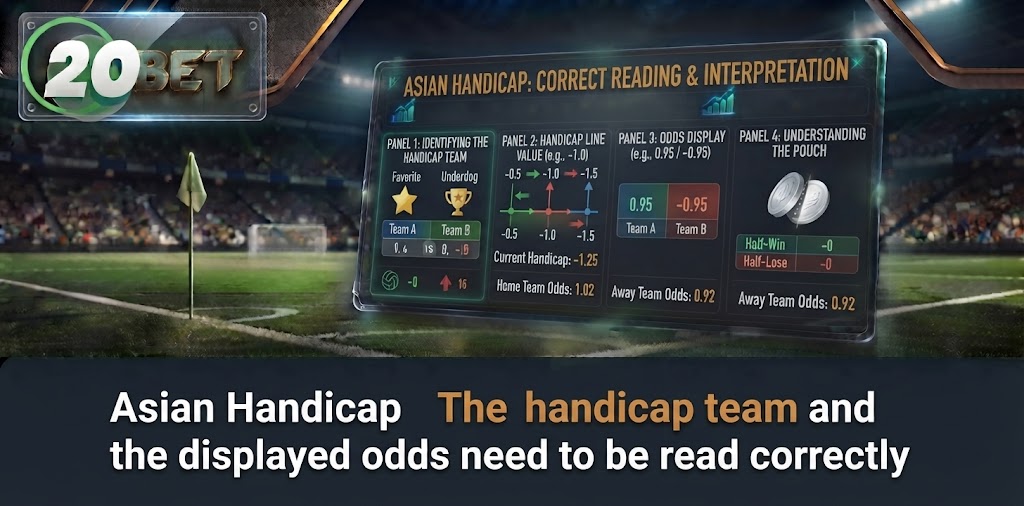
The first step is to recognize the side giving the handicap. The interface may display information through signs, positions, or specific presentation methods, so readers should rely on the actual displayed labels rather than guessing which side is stronger. When viewing Asian Handicap on 20BET, check both sides and the accompanying benchmark. If you are unsure how the platform displays it, you should read the market’s explanation section. Misidentifying the favorite will invert your entire subsequent understanding of the results.
Understanding the 0 Benchmark and Draw Scenarios
The 0 benchmark is typically used when there is no goal handicap between the two sides. In common calculation methods, a draw result has a different processing mechanism compared to one side winning the match. However, readers still need to check the specific conditions currently displayed on the platform. Asian Handicap on 20BET at the 0 benchmark should be understood from the market’s own rules, not based solely on familiar terminology. A safe approach is to set up three examples of winning, drawing, and losing to test your reading comprehension before following a match.
Reading 0.25, 0.5, and 0.75 Benchmarks
Quarter benchmarks like 0.25 and 0.75 have a different structure from half benchmarks like 0.5. They typically involve splitting conditions between two adjacent benchmarks, making it easy for beginners to get confused if they only memorize a single sample result. When learning Asian Handicap on 20BET, it is best to separate each benchmark and use hypothetical scores to test them. You should not memorize a disconnected table without understanding the underlying logic, because when the handicap sign switches sides, the interpretation changes accordingly.
Match Data and Handicap Context
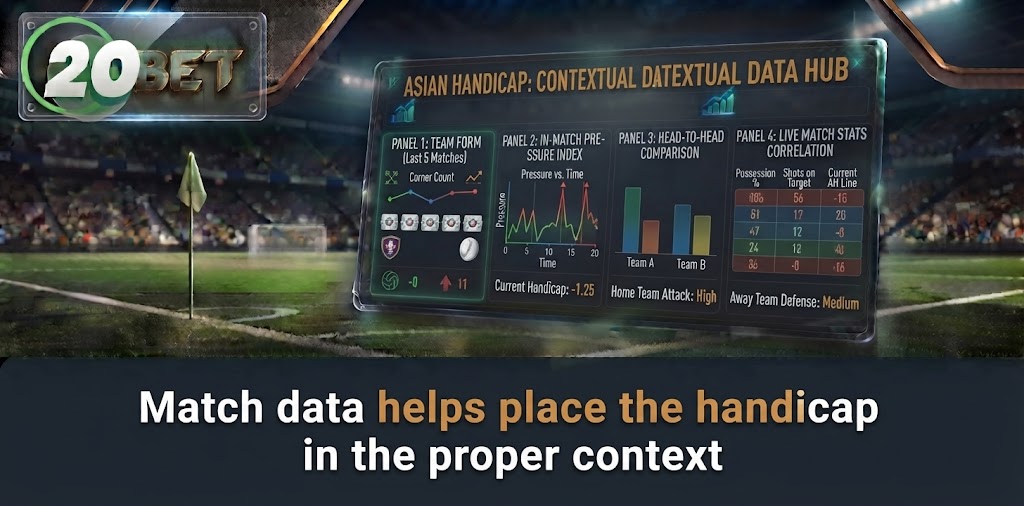
Handicap lines can change before kickoff or while the match is underway. Changes do not automatically indicate the cause, so avoid jumping to conclusions too quickly. Handicaps should be read alongside lineup information, time, and match status if such data is available.
Comparing Opening and Current Benchmarks
Observing benchmarks at two different points in time can help readers recognize that the market has shifted, but it is not enough to confirm the reason. Lineup news, schedules, squad updates, or new data streams can all be relevant. When tracking Asian Handicap on 20BET, readers should note the exact timing of each benchmark to avoid comparing data out of context. Even a small change must be read with the correct sign and the right side before evaluating its significance.
Placing Form in the Proper Context
Recent form is frequently evaluated, but a short streak can be influenced by opponent quality, home/away venues, and a tight schedule. Readers should look at how a team creates chances, defends, and reacts in different score states rather than simply counting wins and losses. With Asian Handicap on 20BET, form data should serve as a reference to understand the correlation between teams, not as a guaranteed formula for the next match. The smaller the sample size, the higher the level of caution required.
Tracking Live In-Play Changes
When a match is ongoing, the score and remaining time heavily impact how the market is displayed. A leading team may change its playing style, while a trailing team must increase its attacking tempo. Live Asian Handicap lines should therefore not be read using pre-match context while ignoring new developments. Readers must verify the match minute, current score, and benchmark range before reviewing data each time.
Checking Process to Minimize Confusion
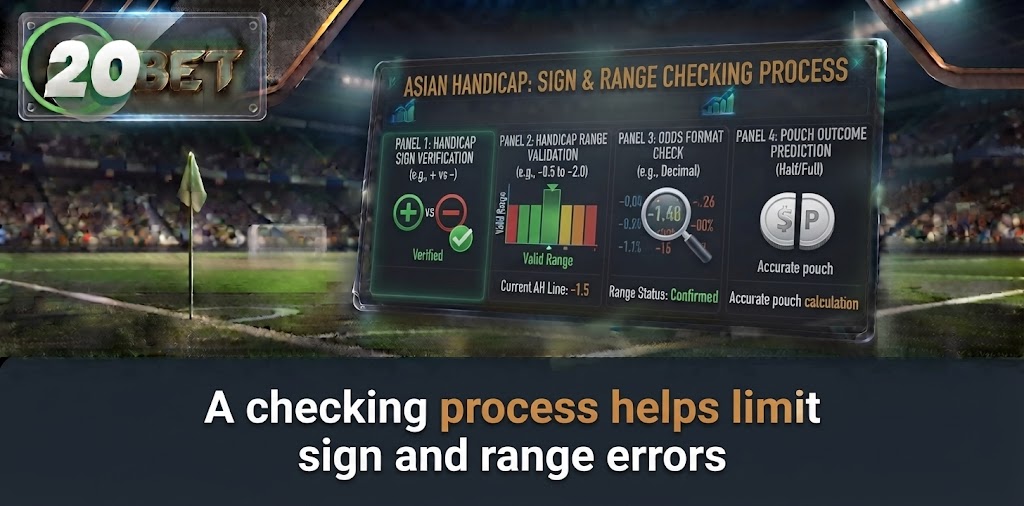
A fixed sequence helps readers avoid reversing signs, confusing ranges, or using outdated data. Because Asian Handicap features many closely related benchmarks, checking slowly and methodically is typically more useful than reacting quickly to a short-term change.
Read the Market Name First, Then Look at the Benchmark
The same match can feature full-match markets, first-half markets, or other variations. If you only look at the 0.5 benchmark without reading the title, you might apply the wrong conditions. When opening Asian Handicap on 20BET, identify the range first, followed by the favorite team, and then read the number. This sequence is especially helpful on small screens, where multiple data lines sit close together and can easily cause confusion when scrolling quickly.
Self-Check Using Hypothetical Scores
An easy way to learn is to set up hypothetical scores such as 0-0, 1-0, 1-1, or 2-1 and cross-reference them with the benchmark you are studying. This exercise helps readers visualize the conditions rather than just memorizing benchmark names. With Asian Handicap, you should test scenarios where the favorite wins, draws, and loses to verify your understanding. If your self-calculated result differs from the platform’s explanation, you should return to read the rules before continuing.
Maintain Limits When Tracking Multiple Matches
Tracking multiple matches simultaneously makes it easy for readers to confuse benchmarks or react emotionally. It is best to choose a moderate number of events, and set time and budget limits before starting. Asian Handicap should not become a reason to increase your participation level after an unexpected result. If you lose focus or continuously change your decisions, pausing helps protect your personal plan and maintain controlled usage.
Conclusion
Asian Handicap needs to be read in a specific sequence: market range, favorite team, sign and benchmark, and only then placing the data into the match context. Benchmarks like 0, 0.25, 0.5, and 0.75 have different conditions, so readers must understand the underlying logic rather than relying on rote memorization. On 20BET, remember to check data timing, use hypothetical examples, and maintain personal limits to minimize errors.
See more : Corner Kick Betting 20BET – An Easy-to-Understand Guide to Reading Indicators and Angle Markers